
Ambassador Trevor Bester: Building Sovereignty Through Trade, Resources and Health

A defining moment in Ambassador Trevor Bester’s journey did not occur in a boardroom or at an international summit. It took place while he was reviewing a feasibility study detailing the wealth a mineral deposit could generate. Looking beyond the window, however, he saw a community without reliable electricity, clean water or the benefits of that wealth. The contrast left a lasting impression and reinforced a belief that continues to guide his work today. “Transformation is not a theory. It is a road you can walk on, a power line you can see, a tap you can turn.”For Bester, development is meaningful only when opportunity translates into tangible improvements in people’s lives. It is a principle that has shaped his work across trade, infrastructure, policy and healthcare.Building Value Beyond Extraction As Chairperson of Envico Trading, Chief Commercial Officer for next generations roads Africa, Ambassador and Second Vice President of the Global Chamber on African Trade, Rights and Economic Development (GCATRED), and Regional and International Business Development Director at Med21 Mozambique, Bester works across sectors united by a common objective: practical sovereignty built through investment, infrastructure and institution-building. At Envico Trading, the focus extends beyond the trading of gold, oil and gas. The organisation places significant emphasis on logistics, processing capacity and infrastructure, recognising that lasting value creation depends on more than resource extraction. Bester advocates an integrated approach in which investment in natural resources contributes to energy systems, water infrastructure and logistics networks supporting long-term development. GCATRED represents the policy and diplomatic dimension of that vision. Its work spans trade policy, economic development, infrastructure finance, energy, healthcare, entrepreneurship, digital transformation and issues affecting African growth. Bester views these sectors as interconnected elements of economic sovereignty rather than isolated disciplines. Central to his thinking is a refusal to accept a permanent model in which Africa exports raw commodities and imports finished products. Instead, he believes greater value should be retained through local processing, stronger institutions and strategic investment. This work aligns with continental frameworks such as Agenda 2063 and the African Continental Free Trade Area (AfCFTA), not through formal affiliation, but because they reflect priorities identified by African nations themselves. The Discipline Behind Progress The challenges associated with this vision are often invisible. Bester recalls spending eighteen months negotiating a single word within a contract clause because of its potential implications for a nation’s sovereignty over its own resources. There were no headlines or public recognition, yet the experience reinforced his belief that meaningful progress is often achieved through patient, technical and largely unseen work. He does not attribute success to luck. Instead, he believes opportunities become meaningful only when preparation has already taken place. His approach is guided less by urgency than by alignment. Rather than pursuing every opportunity, he prefers disciplined decision-making, studying circumstances carefully and committing only when long-term interests are properly served. A Vision for Africa’s Future What continues to drive Bester is a vision of African industries supported by African engineers, infrastructure and decision-makers. He envisages resource-processing facilities and energy hubs that generate value while helping support water treatment systems, technical colleges and future infrastructure. His inspiration comes from the resilience of African entrepreneurs who often operate under unequal conditions. Through his work, he hopes to contribute to a future in which African nations negotiate from positions of strength, supported by sound frameworks, verified resources and leverage. Leadership Through Empowerment For Bester, leadership is not measured by the number of followers one attracts but by the number of leaders one helps create. Among the achievements he values most is witnessing a young professional he had mentored walk into a high-level ministerial negotiation and command the room with complete authority. “They did not need me there. That was the point.” The moment reinforced his belief that lasting institutions are built by empowering others. “Create followers and you build a personality that fades. Create leaders and you build something that may outlast you.” Health Sovereignty and Community Impact Alongside his work in trade and development, Bester remains committed to strengthening healthcare systems. Through Med21 Mozambique and The Bester Foundation’s Epidemic Eradication Initiative, he supports efforts aimed at improving healthcare intelligence, strengthening community health infrastructure and enhancing disease-response capabilities. The Foundation contributes to efforts against malaria and Ebola through practical interventions, local distribution networks and support for frontline healthcare systems. The objective, much like his work in trade and development, is to help build locally owned, resilient systems capable of serving communities effectively. As he looks ahead, Bester remains focused on a simple principle: Africa’s resources, whether minerals, energy or information, should support the continent’s own industrialisation, infrastructure and prosperity. Achieving that vision requires patience, investment and strong institutions, but he believes it remains necessary. Awake. Prepared. Sovereign. But never pretending it is simple.
Reiner Petzold: Shaping the Future Through Digital Leadership and Measurable Innovation
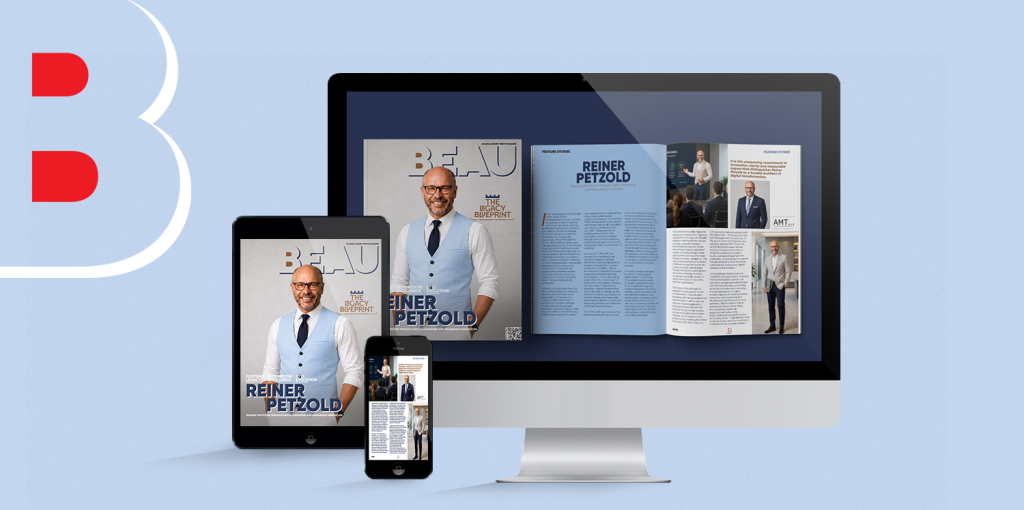
In an increasingly interconnected world, where digital transformation has evolved from a competitive advantage into a strategic necessity, visionary leadership is defined not merely by the ability to anticipate change, but by the capacity to transform complexity into sustainable opportunity. Reiner Petzold has built his distinguished career upon precisely this principle. As the driving force behind AMT and the founder of Global CXO Advisory Services, he has consistently demonstrated that meaningful innovation is achieved when strategic foresight is matched by disciplined execution, measurable outcomes and an unwavering commitment to empowering organisations and their leaders. His journey reflects a steadfast dedication to creating enduring value in an evolving business landscape. Petzold’s professional journey has been characterised by continuous learning, transformation and a deep belief that leadership is a responsibility rather than a position. From project manager to internationally recognised strategist, innovation expert, Chief Executive Officer and Chief Digital Officer, every stage of his career has strengthened his understanding of business excellence and organisational growth. As he reflects, “Each of these positions has taught me to think strategically and deliver operational excellence as CEO and CDO.” These experiences reinforced his conviction that sustainable success is achieved through clarity of vision, resilience, disciplined execution and the ability to empower others to realise their full potential. Established in 1995, AMT was founded on a philosophy that remains increasingly relevant. Rather than treating digitalisation, business strategy and innovation as separate disciplines, Petzold envisioned an integrated framework where each reinforces the other. As he explains, “The unique selling proposition is the combination of three worlds: Digitalisation, Business and Innovation.” Supported by expertise in digital transformation, data and artificial intelligence, this approach enables organisations to convert strategy into measurable performance, delivering sustainable value, tangible return on investment and future-ready solutions.One of the defining moments of his entrepreneurial journey came with the launch of Global CXO Advisory Services, an ambitious initiative requiring new market positioning, organisational transformation and a successful international rollout. The experience strengthened his belief that enduring achievement is founded upon perseverance rather than circumstance. While opportunities may occasionally arise through favourable conditions, he maintains that sustainable growth is built through hard work, strategic discipline, continuous learning and the courage to innovate. Resilience, for Petzold, is not merely overcoming challenges but transforming them into opportunities for long-term progress. Innovation, however, represents far more than technological advancement. It is the driving force behind Petzold’s passion for helping organisations unlock their full potential through the intelligent integration of business strategy, digital capabilities, data and artificial intelligence. Every transformation, he believes, should foster cultures where innovation becomes an enduring capability. His focus remains firmly on delivering meaningful results that generate both economic value and lasting competitive advantage. This philosophy naturally shapes his perspective on leadership. Rejecting competition for its own sake, Petzold believes in leading with the mindset of a tiger, purposeful, focused and strategically decisive. Rather than chasing markets, exceptional leaders anticipate change, create opportunities and shape the future through innovation. Leadership, in his view, is measured not by the number of followers one gathers but by the number of leaders one develops. Through transparency, participation and visionary thinking, he strives to cultivate individuals capable of driving meaningful change within their own organisations. The impact of this philosophy is reflected in an exceptional record of achievement. Under Petzold’s leadership, AMT has generated more than €1.5 billion in added value for over one hundred organisations while expanding its international influence through trusted advisory services and digital transformation initiatives. His contributions have earned honours including the Global 100 – 2026 Award for Best Management Consulting Business of the Year in the AI and Digital category and the Global CXO Advisor of the Year at the Global CEO Excellence Awards 2025 and the ICIEET 2025 Award for Commitment and Support. Beyond AMT, he serves on the Harvard Business Review Advisory Council, contributes to influential advisory and expert boards, lectures at leading Swiss universities, and continues to publish thought leadership that advances conversations surrounding digital business and innovation. Looking ahead, Petzold remains inspired by the opportunity to shape the future of global business. His ambitions include expanding Global CXO Advisory Services, advancing AI-driven innovation and nurturing the next generation of digital leaders capable of creating lasting economic and societal impact. His message is both practical and optimistic: digital transformation extends far beyond technology, encompassing leadership, organisational culture and measurable business performance. As he aptly states, “Digitalisation and AI are our future, we show you how to move forward as a trusted advisor.” It is this unwavering commitment to innovation, clarity and measurable impact that distinguishes Reiner Petzold as a trusted architect of digital transformation.
Paul Taylor: Building a Portfolio Career Through Purpose, Learning, and Leadership
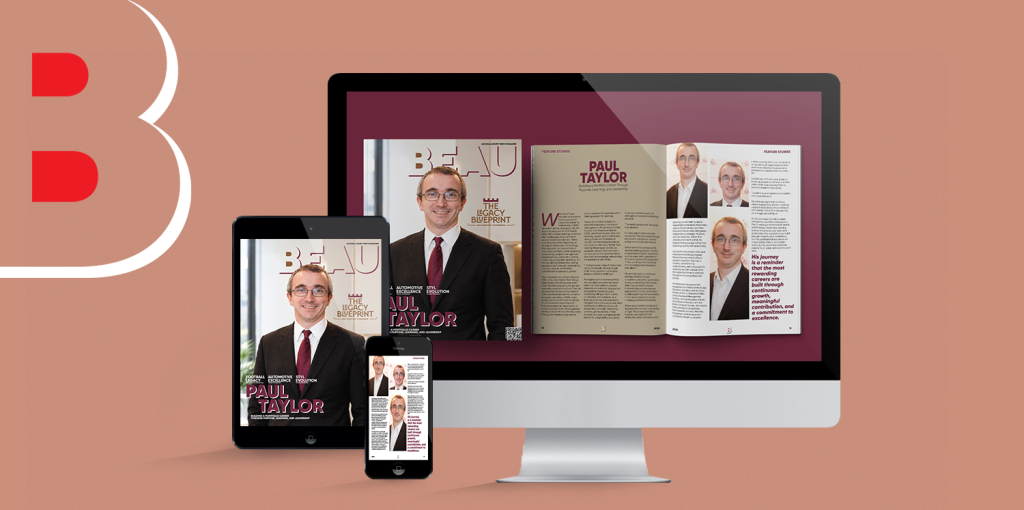
When Paul Taylor decided to transition from a successful corporate career to freelancing in 2007, he wasn’t simply changing jobs, he was choosing a path that would allow him to keep learning, embrace new challenges, and contribute across multiple disciplines. Nearly four decades after beginning his journey in Information Technology, that decision has evolved into a rewarding portfolio career spanning consultancy, project management, board advisory, education, writing, mentoring, and public speaking. His journey demonstrates that lasting success is built through adaptability, curiosity, and an unwavering commitment to personal growth.Paul’s professional career began in 1988 in the Information Technology department of a UK private bank. Over the following years, he gained extensive experience across financial services before becoming Head of Software Development for a bank’s European subsidiary. While many professionals would have remained on a traditional corporate path, Paul recognised an opportunity to create a career that offered greater variety and continuous development. Moving into freelancing enabled him to combine his expertise with a lifelong passion for learning. Today, his portfolio extends far beyond consultancy and project management. He serves as a Chair, Trustee, Non-Executive Director (NED), and Board Advisor while also lecturing, speaking at conferences, writing books and professional articles, and mentoring individuals on a one-to-one basis. Rather than viewing these responsibilities as separate careers, Paul sees them as interconnected opportunities to broaden his knowledge while sharing his experience with others.“Having a wide range of roles allows me to continually develop myself while ensuring every opportunity brings a different challenge.” Managing such a diverse portfolio has required more than technical expertise. Paul believes success depends on understanding people, recognising knowledge gaps, and being willing to learn quickly in unfamiliar environments. As a freelancer, he has also learned to navigate fluctuating workloads while continually building professional relationships through networking and thought leadership. These experiences have strengthened his resilience, adaptability, and ability to deliver consistent results. His philosophy on success is refreshingly practical. “The harder people work, the luckier they become.” For Paul, opportunities are rarely accidental. They are created through preparation, persistence, and the willingness to continually improve. At the heart of his professional life are two enduring passions. The first is delivering the highest standard of work for every client, regardless of the size or nature of the assignment. “There is nothing more motivating than receiving positive feedback from clients.” His second passion is continuous learning. Whether through consultancy, education, governance, writing, or mentoring, Paul actively seeks opportunities to expand his knowledge and embrace new perspectives. It is this commitment to lifelong learning that has enabled him to remain relevant in an ever-changing professional landscape. When asked whether he believes in staying in the “rat race” or becoming a “tiger,” Paul’s response reflects the balanced approach that defines his career. Consultancy and teaching provide stability and a dependable professional foundation, while his Board Advisory and Non-Executive Director roles offer greater independence, strategic influence, and calculated risk. Rather than choosing one over the other, he believes lasting success comes from balancing security with opportunity. Among the many people who have influenced his thinking, physicist Richard Feynman remains Paul’s greatest inspiration. Feynman’s curiosity, commitment to understanding, and enthusiasm for exploring new ideas closely mirror the values Paul strives to embody throughout his own professional journey. His dedication has earned him recognition as a Fellow of the Higher Education Academy and the Royal Society of Arts, a Chartered Fellow of the Chartered Management Institute, and memberships of both the Institute of Directors and the British Computer Society. Yet despite these prestigious recognitions, Paul measures success differently. His greatest achievements lie in consistently delivering value for clients, earning their trust, continuing to secure meaningful opportunities, and never allowing his personal or professional development to stand still. Leadership, in Paul’s view, is about inspiring people to achieve a shared vision while empowering them to become leaders themselves.“Leaders should create more leaders, not more followers.” He believes organisations thrive when leadership is shared, creating capable individuals who contribute confidently rather than depending on a single central figure. As he continues to build a career defined by versatility and purpose, Paul’s message remains both simple and timeless: never stop learning, always strive to do your best work, and protect the reputation you build through integrity and consistency. For him, professional success is not measured by titles or accolades alone, but by remaining someone people trust, value, and want to work with. His journey is a reminder that the most rewarding careers are built through continuous growth, meaningful contribution, and a commitment to excellence.
David Hawk: The Man Who Never Stopped Asking Better Questions
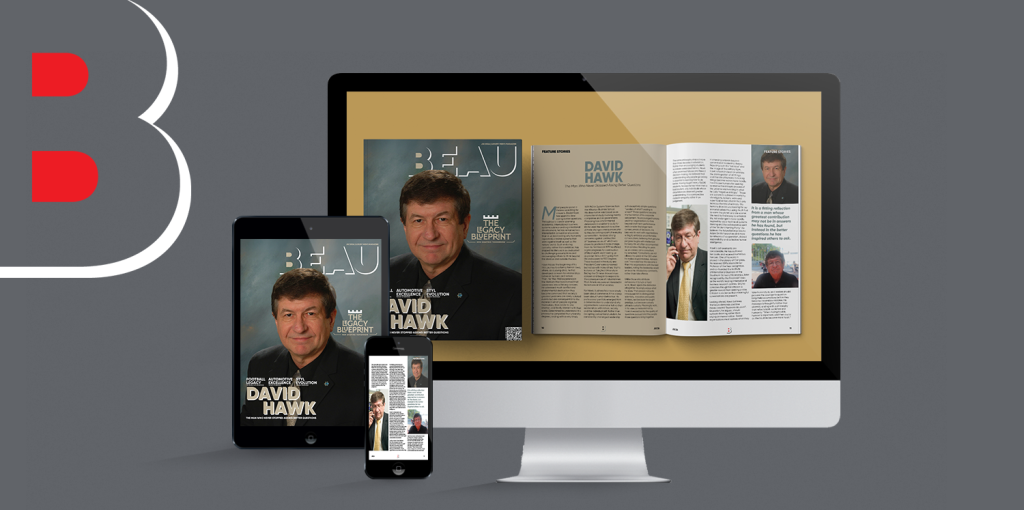
Most people spend a lifetime searching for answers. David Hawk has spent his time asking better questions. Throughout a career spanning academia, international business, systems science and organisational development, he has remained less interested in conventional success than in understanding why humanity repeatedly creates systems that work against itself as well as the natural world. Such enduring curiosity, rather than ambition, has shaped his life’s work as dedicated to challenging assumptions and encouraging others to think beyond the obvious and outside the box. Hawk traces the beginning of his life’s journey to a family farm in Iowa, where, as a young child, he first developed concern for relationships between humans and nature. Then, his 1966-1968 experience in the Vietnam War transformed that awareness into a lifelong concern. He witnessed much conflict and environmental destruction thus became convinced that society’s greatest problems are rarely isolated events but are consequential to the manner in which people organise themselves, then relate to one another, and finally interact with their world. Determined to understand this process he completed four university degrees, ending with a very timely 1979 PhD in Systems Sciences from the Wharton Business School. His dissertation was based on an international study involving twenty companies and six governments. Proposing how environmental deterioration would end badly for life he used the research to outline climate change consequences prior to they becoming a part of everyday conversation. He raised strong concerns against continuation of “business as usual” which was shown to produce climate change. From his first book in 1979 he offered a grim prognosis for continuation of life on earth via it heating up as planet Venus did in going from life and oceans to 900 degrees. Those involved in the study and President Carer were concerned but not so with many others. Via his lectures at Tsinghua University in Beijing the Chinese showed more concern and began to respond to the consequences of industrial men. Most Americans were uninterested in his lectures at US universities. For Hawk, business has never simply been about commerce; it has always been about human behaviour. His professional portfolio emerged from a determination to understand why organisations succeed or fail via their relationships with nature, society, and the individual self. Rather than accepting conventional wisdom, he consistently challenged leadership with deceptively simple questions: “Leaders of what? Leading to where?” Those questions became the foundation of his corporate advisement. He encouraged humans and their organizations to think beyond short-term performance and consider the longer-term consequences of decisions. His bias was to work with organizations willing to embrace uncomfortable conversations, believing that genuine progress begins with intellectual honesty. His wit often accompanied that candour. Recalling his years as an advisor, not a consultant, he remarked, “Consultants are not allowed to swear at the CEO when he makes stupid mistakes. Advisors can.” He noted how this became a filter into organizations with the best leaders, noting the leadership would smile at his introductory comments, rather than take offence. Unlike those who attribute achievement to luck or hard work, Hawk rejects the distinction altogether. He simply enjoys what he does. That passion naturally introduced him to distinguished scientists, innovators and public thinkers, not because he sought prestige, but because curiosity attracts curiosity. Meaningful work, in his view, is measured not by hours invested but by the quality of questions pursued and the people those questions bring together. The same philosophy shaped more than three decades in education. Rather than encouraging students to imitate celebrated heroes, Hawk often examined failures and flawed decision-making. He believed that understanding why people go wrong is essential to learning how to do better. Having taught nearly 10,000 students, he says he has never met a bad student, only individuals whose circumstances deserved greater understanding. It is a perspective rooted in empathy rather than judgement. His thinking extends beyond conventional leadership theory. Rejecting both the “rat race” and the image of the solitary tiger, Hawk reflects instead on entropy, the disintegration of all things, and the role of humans in making things become worse more rapidly. He criticizes humans for seeking to reverse the entropic process of the universe via investing in what he calls “negative entropy.” Those are actions to achieve immortality via religions, nations, wars and superficial actions that in fact only increase the rate of entropy. We humans drive around looking for our immortal selves thus using much fuel to warm the planet and die sooner. We need to find a way to enhance life, not endanger it more rapidly. Inspired by socio-technical systems thinking and the collaborative spirit of the “Ancient Hunting Party”, he believes the future belongs less to Adam Smith hierarchies and more to networks of cooperation, shared responsibility and collective human intelligence. Hawk’s achievements are considerable. He has authored ten books and received numerous honours. One of his works is placed in the Library of Congress. He received IBM’s International Professor of the Year recognition, and co-founded the Institute of International Business at the Stockholm School of Economics, later recognised by the Financial Times as the world’s leading international business research centres. Still, he considers thoughtful criticism a greater reward than seeking praise. Criticism is evidence that meaningful conversations are present. Looking ahead, Hawk believes the future demands decisive moves beyond “business as usual”. Education, he argues, should cultivate learning rather than relying on memorisation. Social organisations must restore what they take from nature, and leaders should possess the courage to question long-held assumptions before they become irreversible mistakes. His message is thoughtful rather than alarmist, ending with a philosophy that reflects both resilience and humanity: “When facing trouble, humour is important, and then crucial as the troubles become more harsh.” It is a fitting reflection from a man whose greatest contribution may not be in answers he has found, but instead in the better questions he has inspired others to ask.
The Boy Who Talked Back to Rhythm: Nishit Gangani’s Tabla Odyssey

At three, when most children were learning to stack blocks; Nishit Gangani was already conversing in taal. Born into the Jaipur Gharana and trained by his revered guru Pandit Fateh Singh Gangani, Nishit’s introduction to the tabla felt less like a hobby and more like a language he was destined to speak. Celebrated as the “Childhood of Legends” and recognized by the Indian government as one of the youngest tabla child wonders, Nishit’s performance has an old-world richness with a modern kick. The spark ignited early. At four, Nishit performed in public for the first time, and from there on, the circuit was his school. He has shared stages with some of the brightest on the subcontinent. One recollection is found in a special way, “He sent his warm wishes to me!” reminisces Nishit about his meeting with Kathak icon Pandit Birju Maharaj on the maestro’s 80th birthday. It was not just an encounter, it was a blessing chiseled on the life of a young performer. What makes Nishit different is the sense of grounding his ambition. “My guruji and my parents have always been there for me and inspire me even when I am performing in front of highly acclaimed artistes,” he explains. Appreciation and discipline are the building blocks of his art. With their encouragement, he has built early acclaim into art and not indulgence. The resume is a tour of Indian classical music’s holy sites and world stages. Nishit has soloed tabla at Ustad Allah Rakha Khan Sahab’s Guru Poornima, the Dumdum Classical Music Festival, and the Doverlane Music Conference. He has also participated in Lalit Arpan Festival in Delhi, performed internationally in Sochi and Edinburgh, and adorned festivals all over Bangladesh and Russia. A brief video of the Santati Festival 2018 uploaded on the Facebook page of the Artist Association of India became viral, surpassing 1.3 million views and evoking appreciation from renowned musicians, including Adnan Sami. Testimony that in this era of digital media, classical genius can still find a huge following. But aside from applause, Nishit is concerned with accuracy. “All that comes to my mind while playing for exponents is that I shouldn’t commit any errors,” he confesses. To him, the pressure of playing for legends is not fear but loyalty, a moral obligation to pay tribute to lineage. With fame comes comparisons. His online fans tend to call him the “next Zakir Hussain” or a “young legend.” Nishit takes these in his stride. “A number of compliments are directed my way, even through online remarks,” he smiles demurely. The comparisons make him blush, but his reaction is down-to-earth: Just keep performing, keep practicing, and let the work do its talking. That work does not relent. While the pandemic silenced stages, Nishit went inward, putting in hours of riyaz to hone his craft. Offstage, he spends time on physical conditioning, aware that endurance and power are as important to performance as technical prowess. His aesthetic sense brings yet another dimension to his on-stage persona, “he also ensures that what he wears is as dramatic as his performance,” observes one profile. Together, discipline, fitness, and flair have formed an artiste equally comfortable in classical settings and on modern platforms. Nishit’s journey strikes a chord because tradition and contemporary times exist side by side in his path. Though anchored in the Jaipur Gharana’s rich vocabulary, his social-media fame and youthful verve speak to broader, younger publics. But he never gets swayed from his north star, “Our ancestors have taught us a lot and it is our duty to take it ahead. I will never forget that. I want to make my guruji and parents proud,” he says. Even school life has been accommodative. SD Public School has gone ahead and modified examination dates so that he does not have to miss festival performances, so his education and artistry may develop hand in hand. This nurturing environment, family, guru, and school, has provided him with the unusual privilege of a balanced childhood that is as disciplined as it is delightful. Now, at this time, still young, still growing, Nishit’s path is about more than headline acts. It’s about the tiny rituals that define an artiste: The early morning riyaz in silence, the wrist’s discipline, the humility to listen, and the heart to play for masters. As fans swipe past viral videos, the richer narrative exists in those solitary hours. Nishit’s objective is austere but powerful: To respect his heritage and please his loved ones with music. While “Childhood of Legends” is the legacy conferred upon him now, Nishit’s journey indicates he is crafting something more resilient, one taal at a time.
Consistency Over Clout: Rajkumar Meena’s Creator Code
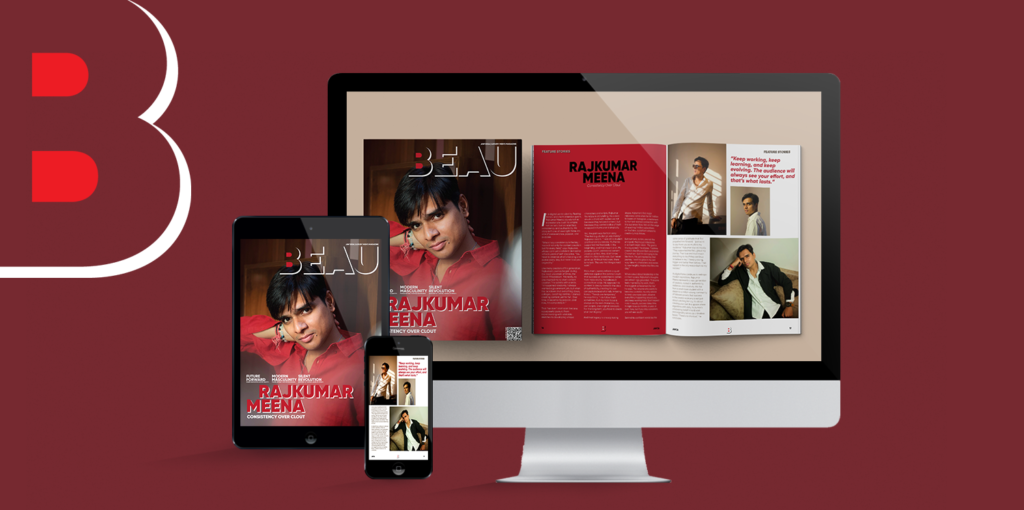
In a digital world ruled by fleeting trends and short attention spans, Rajkumar Meena stands tall as a creator who built his empire not on luck, but on relentless consistency and authenticity. His story isn’t one of overnight fame, it’s one of perseverance, passion, and purpose. “When I say consistency is the key, I mean it not only for content creation but for every field,” says Rajkumar, whose calm yet confident demeanor reflects years of self-discipline. “You have to observe what’s trending and evolve every day, but never lose your originality.” Like many creators of his generation, Rajkumar’s journey began during the most uncertain of times, the Covid-19 lockdown. “Honestly, no one inspired me to start content creation,” he admits with a smile. “It happened randomly. I always wanted a government job, but when the lockdown shut everything down, colleges, coaching centres, I started creating content just for fun. Over time, it became my passion, and now, I’m completely in.” That “random” start soon became a purposeful pursuit. From experimenting with relatable sketches to developing unique characters and scripts, Rajkumar found joy in storytelling. His videos struck a chord with audiences not because they followed a trend, but because they carried a slice of truth wrapped in humour and simplicity. Yet, the path was far from easy. “The first big challenge was money,” Rajkumar recalls. “I was still a student and financially unstable. My friends supported me financially in the beginning, and that meant a lot. My parents didn’t understand content creation at first, they didn’t know what this field really was. But I never gave up. Without hard work, there is no luck. The very first thing is hard work.” Rajkumar’s journey reflects a quiet defiance against the common myth that success on social media comes from mere virality. He believes it comes from value. His approach to content is deeply rooted in the idea of authenticity, creating his own concepts instead of blindly imitating trends. “Trends are temporary,” he says firmly. “I do follow them sometimes, but my main focus is always on my own characters, my own scripts, and original concepts. For the long term, you have to create your own legacy.” And that legacy is already taking shape. Rajkumar’s first major milestone came when he hit 1 million followers on Instagram, a testament to his hard-earned connection with the audience. Now, he’s on the verge of reaching 1 million subscribers on YouTube, a platform where his creativity truly thrives. But numbers, to him, are not the end goal, they’re just milestones in a much larger vision. “My goal is the big screen,” he shares. “I admire creators like Bhuvan Bam and Ashish Chanchlani, but I’m not trying to be like them. I’m just inspired by their journey. I want to grow in my own way, take my characters and stories to new heights, maybe into films one day.” When asked about leadership in the content space, Rajkumar’s thoughts are refreshingly grounded. “If anyone feels inspired by my work, that’s the biggest achievement for me,” he says. “For anyone who wants to become a creator, my only advice is: keep your eyes open, observe everything happening around you, and keep working hard. Don’t expect instant results, success takes time. It might take six months, a year, or even two, but if you stay consistent, you will see results.” Behind his confident words lies the same sense of gratitude that first propelled him forward. “I just want to say thank you so much to my audience,” Rajkumar says earnestly. “They supported me throughout my journey. Their love and trust mean everything to me. If they continue to believe in me, I’ll keep growing, bigger and better than before. Their support is the only reason behind my success.” As digital fame continues to reshape modern aspirations, Rajkumar Meena represents a new generation of creators, rooted in authenticity, resilience, and creativity. His rise from a small-town student with a dream to a million-strong community of followers proves that success in the creator economy is not just about catching trends, it’s about creating your own. In a space where algorithms shift daily, Rajkumar’s unwavering belief in hard work and originality serves as a timeless lesson. “There’s no shortcut,” he concludes. “Keep working, keep learning, and keep evolving. The audience will always see your effort, and that’s what lasts.”
Lyubomir Troharov: Leading With Purpose in a World Driven by Change
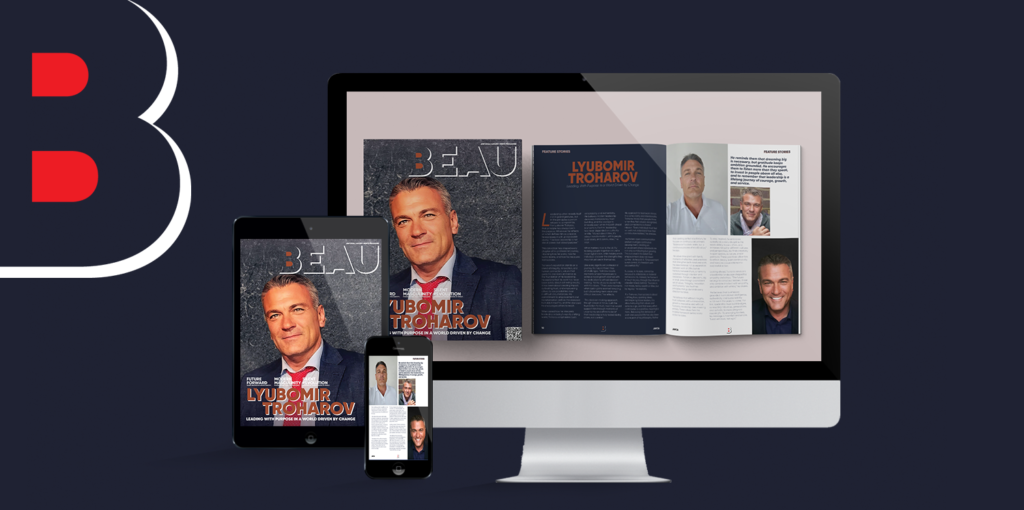
Leadership often reveals itself not in grand gestures, but in the principles a person refuses to compromise. For Lyubomir Troharov, that principle has always been the purpose. Whenever he reflects on what defines him as a leader, he expresses it with unmistakable clarity: “I believe leadership is not about power, but about purpose.” This conviction has shaped every chapter of his professional journey, informing how he works, how he builds teams, and how he measures real success. Troharov’s reputation stands on a blend of integrity, innovation, and human connection, values that guide his decisions and serve as the foundation of his leadership. He explains that his work has never been solely about achieving results; it has been about creating impact, cultivating trust, and empowering others to see possibilities even in difficult circumstances. His commitment to empowerment and transformation defines the standard he holds himself to, and the standard he encourages others to reach. When asked how he interprets leadership in today’s rapidly shifting world, Troharov emphasizes both adaptability and authenticity. He believes modern leadership demands transparency, trust-building, and the courage to innovate even when the path ahead is uncertain. For him, leadership has never depended on authority or title. “It’s not about titles, it’s about transformation, within people, businesses, and communities,” he says. What matters most is the ability to bring people together around a meaningful vision, while helping each individual discover the strengths they may not yet see in themselves. Like every significant professional journey, his has not been free of challenges. Troharov recalls moments where the pressure to achieve rapid growth clashed with his dedication to ethical decision-making. Yet he chose to stand firmly with his values. “There were moments when quick gains seemed tempting, but I chose long-term vision and ethical decisions,” he reflects. This decision-making approach, though slower at times, built the foundation for trust, trust that would support him through moments of uncertainty and affirm his belief that leadership is truly tested during crises, not comfort. His approach to teamwork mirrors the same clarity and intentionality. Troharov insists that people thrive when they feel valued, recognized, and connected to a shared mission. “Every individual must feel valued and understand how their contribution matters,” he stresses. He fosters open communication and encourages continuous development, creating an environment where individuals are not only contributing but growing. This is rooted in his belief that empowerment does not mean control. As he puts it, “Empowerment is not control, it’s freedom with accountability.” Success, in his eyes, cannot be reduced to milestones or material achievements. Instead, he frames it through legacy, through the influence a leader leaves behind. “Success is not measured by wealth or titles, but by legacy,” he explains. For Troharov, true success is about uplifting lives, sparking ideas, and inspiring future leaders. It is about ensuring that values and actions align, and that every effort contributes to a positive, meaningful mark. Balancing the demands of work and personal life has also been a core part of his philosophy. Rather than seeking perfect equilibrium, he focuses on continuous adjustment. “Balance isn’t a static state, but a continuous process of recalibration,” he says. He values time spent with family, moments of reflection, and practices that strengthen both mind and spirit. He views balance not as separation between work and life, but as harmony between them, a harmony sustained through intention and awareness. Troharov’s decisions, big or small, pass through a consistent set of values. “Integrity, innovation, and humanity” are the three principles that guide him in every direction he takes. He believes that without integrity, trust collapses; without innovation, growth is impossible; and without humanity, leadership loses meaning entirely. These values form the invisible framework behind every action he takes. To stay inspired, he embraces curiosity as a daily discipline. He reads widely, travels often, and immerses himself in different cultures and perspectives. He finds creativity in quiet spaces, in nature, and in gratitude. These practices allow him to reflect deeply, learn continuously, and translate observations into purposeful action. Looking ahead, Troharov envisions a leadership landscape shaped by empathy and ethics. “The future belongs to conscious leaders, those who combine intellect with empathy, and ambition with ethics,” he shares. He believes that businesses grounded in emotional intelligence, authenticity, and sustainability will thrive in the years to come. For him, leadership must build bridges, connecting industries, generations, and cultures, to make progress meaningful. To emerging leaders, his message is heartfelt and simple, “Lead with love, not ego.” He reminds them that dreaming big is necessary, but gratitude keeps ambition grounded. He encourages them to listen more than they speak, to invest in people above all else, and to remember that leadership is a lifelong journey of courage, growth, and service.
L. S. Ganesan: Leading with Vision, Values, and Versatility

For over four decades, L. S. Ganesan has embodied what it means to lead with both intellect and intuition. A visionary in the world of IT and business strategy, his journey reflects the rare blend of technological mastery and human-centered leadership. From spearheading multi-million-dollar digital transformations to mentoring corporate leaders, Ganesan’s path has been shaped by adaptability, humility, and an unrelenting pursuit of excellence. “Every challenge became a classroom,” he reflects. “Whether it was building global teams, advising Fortune 500 firms, or driving ASEAN business transformations, each experience taught me that success isn’t linear. It’s built on resilience, balance, and continuous learning.” After decades of leading IT strategy within billion-dollar enterprises, Ganesan recognized a fundamental gap, companies were pouring resources into technology without fully realizing business ROI. This insight became the seed of his entrepreneurial vision. His consulting portfolio emerged from a simple yet powerful idea: technology must serve business growth, not the other way around. “I wanted to bridge that gap between boardroom vision and operational execution,” he explains. “Our focus is on IT strategy, digital transformation, go-to-market design, and executive coaching, ensuring technology translates into measurable business impact.” Through his strategic advisory practice, Ganesan has guided organizations in turning digital investments into sustainable value, proving that when technology aligns with purpose, transformation becomes inevitable. Like any true leader, Ganesan’s journey has not been without obstacles. Driving digital change across diverse ASEAN markets, managing cultural integration, and convincing conservative boards to see IT as a value driver were all uphill battles. Yet, he views these challenges as stepping stones rather than setbacks. “Success is 90% hard work and 10% luck,” he asserts. “Luck may create opportunities, but only relentless preparation and resilience make you ready when those opportunities arrive. Hard work gives you control; luck only gives you a chance.”His philosophy is grounded in perseverance, a value that has not only defined his career but also shaped his leadership style. Beyond strategy and systems, Ganesan’s true passion lies in enabling both people and organizations to reach their fullest potential. He finds immense fulfillment in mentoring leaders and guiding them toward meaningful growth.“My passion is about helping others make better decisions, whether through digital innovation or personal development,” he says. “At heart, I find purpose in creating impact, inspiring individuals to embrace lifelong learning.” For Ganesan, leadership is less about authority and more about empowerment. His approach resonates deeply with the philosophy of servant leadership, where the measure of success lies in how many future leaders one creates. “A true leader doesn’t create followers,” he emphasizes. “They create more leaders. Leadership is about unlocking potential in others so they can innovate fearlessly and lead future generations with purpose.” When asked if he prefers to be part of the rat race or to be a tiger, Ganesan smiles knowingly. “The rat race thrives on comparison,” he says, “while the tiger walks its own path.” For him, being a tiger means operating with clarity, independence, and self-assurance, qualities that have guided his decisions throughout his career. “It’s not about running faster than others,” he adds, “but about walking firmly in your own direction with confidence.” Ganesan draws deep inspiration from timeless philosophies, the Bhagavad Gita, Buddha’s teachings, and Stoicism, which guide him toward balance, detachment, and purposeful action. Professionally, his goal is to leave behind a legacy of helping businesses transform through technology while mentoring the next generation of leaders. Personally, he strives to live a mindful, simple life grounded in spirituality and continuous self-improvement. Over his illustrious career, Ganesan has led IT transformations across Fortune 500 companies, managed teams of 1,300+, and delivered global programs exceeding $20 million. As SVP of Group IT at a $20B conglomerate, his impact has been industry-defining. His recognition by Gartner and as a Recipient of the CNBC–TV18 Award further testify to his excellence.With 695 certifications, Ganesan’s commitment to lifelong learning stands as a testament to his philosophy, that mastery is achieved through constant evolution. To Ganesan, life is an integrated journey where business, family, spirituality, and creativity coexist harmoniously. Meditation, philosophy, and cinema bring him as much joy as boardroom strategy sessions. He advocates for holistic growth, one that nurtures the mind, body, and spirit equally.“The world today rewards adaptability and authenticity,” he reminds readers. “Success is not just about milestones but about balance. Stay curious, stay humble, and above all, stay human.” His parting advice is simple yet profound, “Focus on nurturing your strengths because they set you apart. Neutralize your weaknesses so they don’t hold you back. True success lies in amplifying what you do best while managing your limitations.”
Dr. Maurice Tetne: Resilience That Writes Its Own Story
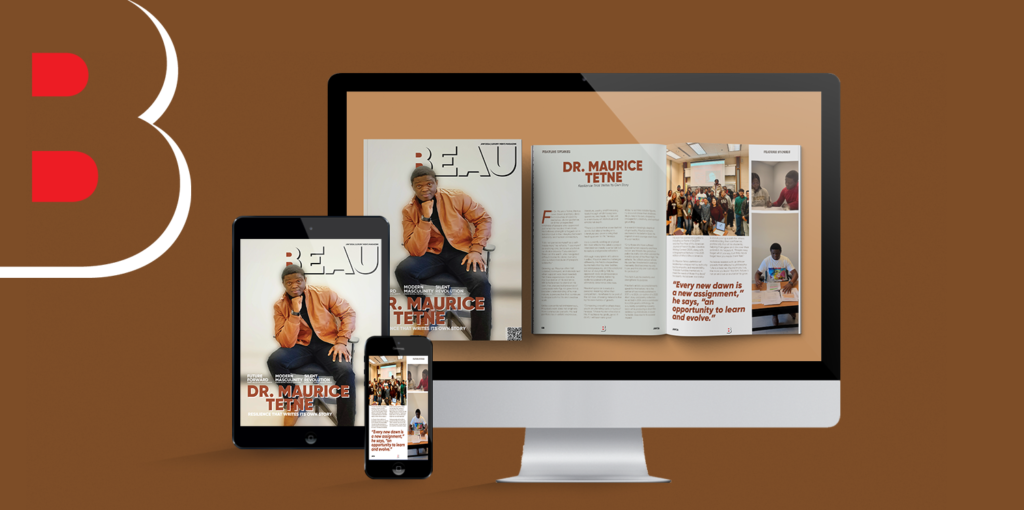
For Dr. Maurice Tetne, life has never been a solitary climb but a journey shaped by resilience, divine guidance, and the unexpected kindness of people who appeared just when he needed them most. He believes strength is forged not in isolation but in the interplay between adversity and human connection. “I do not perceive myself as a self-made man,” he reflects. “I see myself as a strong one, because you have no choice anyway if you are born Black on this earth, who navigated difficult moments alone, but who also survived because of people’s solidarity.” Growing up, Maurice often felt isolated, betrayed, and abandoned when support was most needed. Yet these experiences became the foundation of his resilience. While he learned to stand on his own, the unexpected presence of compassionate figures gave him a broader understanding of human nature, a perspective that continues to shape both his life and creative work. Unlike conventional entrepreneurs, Maurice’s work does not originate from commercial pursuits. His real portfolio lies in artistic expression, literature, poetry, and filmmaking, tools through which he explores, questions, and heals. For him, art is a sanctuary of intellectual and emotional depth. “There is a destructive power behind words, but also a healing one. Literature and cinema bring that healing power to life,” he says. He is currently working on a lyrical film that reflects this belief, a project intended not merely to entertain but to restore and provoke reflection. Although many speak of business hurdles, Maurice sees his challenges differently. His field is shaped less by markets than by inner battles, societal pressures, and the emotional labour of storytelling. Still, his approach rests on perseverance rather than chance, believing resilience paired with grace ultimately determines who rises. Maurice’s passion is rooted in personal meaning rather than competition. He refuses to be part of the rat race, choosing instead to live by his own metrics of growth. “Comparing oneself to others traps you in an unending cycle of turmoil,” he says. “I have my own checklist in life; if I achieve my goals, good. If I don’t, I will learn and grow.” While he admires notable figures, he does not chase their shadows. His journey is his own, shaped by introspection, creativity, and spiritual grounding. In a world increasingly skeptical of spirituality, Maurice remains anchored in his belief in God. His inspiration and courage stem from this connection. “Only those who have suffered beyond human capacity and face racism and threats like gratuitous police brutality can often valorize the invisible power of the Most High,” he reflects. “As a Black person whose life can feel threatened in ordinary moments, God becomes my only hope and the only one I can rely on for protection.” This faith fuels his creativity and strengthens his purpose. Maurice’s artistic accomplishments speak for themselves. He is the author of two novels published in 2017 and 2024, co-author of a 2020 short story and poetry collection re-edited in 2024, and a contributor to a 2024 poetry anthology. He is currently completing a poetry book while producing a short film addressing child abuse, a cause he holds close due to its societal impact. His work has earned recognitions including La Plume d’Or (2017) and the First Prize of the American Journal of French Studies Creative Writing Contest (2021), along with a biographical feature in the 2025 edition of Who’s Who in America. Dr. Maurice Tetne’s definition of leadership is shaped not by authority but by empathy and responsibility. “A leader humbles themselves to meet the needs of those they lead,” he asserts. He believes leadership is about paving a path for others and elevating their confidence, particularly that of his students, helping them grow and discover their potential. As he puts it, “People may forget what you say, but they never forget how you made them feel.” He leaves readers with an African proverb that reflects his philosophy: “Life is a teacher; the more you live, the more you learn.” For him, failure is not an end but an invitation to grow. “Every new dawn is a new assignment,” he says, “an opportunity to learn and evolve.”
Tripat Singh

Breaking Barriers at 80: A Journey of Strength and Spirit At 80 years old, Tripat Singh is not just defying age, he’s rewriting what it means to live with strength and purpose. When he first decided to join the gym at the age of 62, his family doubted his decision, fearing the risks involved. But with quiet determination, he embarked on a path of personal transformation that would later make headlines. From earning a place in the World Book of Records by completing 600 burpees in 45 minutes, to performing 90 Hanuman pushups in a minute surpassing global records Tripat’s story is proof that passion, when pursued relentlessly, can break all limitations. The Spark That Lit the Fire It all began with a personal realization his belly had grown large, and with it, his morale was shrinking. Determined to reclaim his health, Tripat started walking, jogging, and running. Within a short span, his perseverance paid off, and he began winning medals in marathons: 2 golds, 1 silver, and 4 bronzes. But one issue persisted his belly refused to budge. That’s when he turned to strength training. What started as a personal health journey soon became a life mission and the rest, as he says, is history. Facing Youthful Challenges Head-On In an era when most seniors shy away from gyms, Tripat boldly trained alongside the youth. The gym was no easy place for someone his age, yet he embraced the challenge with resilience. Standing shoulder to shoulder with young athletes, he didn’t just keep up, he thrived. To Tripat, the gym was more than a place to work out; it was a battleground where he tested his willpower, pushing himself harder every day. Driven by Passion, Followed by Icons Call it passion or call it stubbornness, Tripat’s consistency is legendary. Except for a planned weekly rest, he hasn’t missed a single workout in years. His dedication hasn’t gone unnoticed his Instagram followers include Indian cricket icon Virat Kohli, Bollywood’s Amy Aela, Roadies star Prince Narula, WWE’s Jeet Rama, fitness influencer Tarun Gill, and many more. To inspire at such a scale at his age is nothing short of remarkable. The Lion’s Path: Where Purpose Leads, Age Follows Tripat Singh walks The Lion’s Path a journey marked not by convention, but by courage, purpose, and unwavering discipline. It is a path of strength, not surrender, of roaring presence, not quiet retreat. For him, age is not a barrier but a badge of honour. Strength training has reshaped both his physique and his philosophy. He believes senior citizens are not meant to fade quietly but to rise boldly, inspire loudly, and lead fearlessly just as a lion does in every stage of life. Becoming His Own Inspiration Tripat’s mission is bigger than personal fitness. He aims to uplift society by inspiring the elderly to step out of self-imposed boundaries. He believes no one should become a burden neither to family nor to society. With his achievements, he wants seniors to realize they too can take care of themselves, contribute meaningfully, and live a life of dignity and purpose. Legacy of Medals and Milestones Tripat’s trophy shelf tells a story of grit. His first bronze came in 2007, followed by silver and gold in subsequent marathons. His most surprising victory came in the Morni Hills Marathon in 2010. He also clinched the Mercedes Benz Arm Wrestling title by defeating a 23-year-old, earned lifetime gym membership at Ozi Gym Mohali for completing 584 burpees, and won the Strongman Title at Chandigarh University in 2023. Today, he proudly holds a world record for 600 burpees in 45 minutes. A Leader Who Inspires Strength To Tripat, leadership means awakening strength that lies dormant within each of us. It is about choosing courage over comfort, and action over apathy. He believes true leaders create more leaders, not followers. In a world where few dare to step forward, he urges others to live fully, laugh freely, and move with purpose because, as he says, God helps those who help themselves. Words of Wisdom Tripat’s closing message is powerful recognitions like the Plank Competition Award, Mercedes Benz Arm Wrestling Award, Burpee Pushups Trophy, Strongman Award, World Record Holder recognition, and Hanuman Pushup Record are not just achievements; they are proof that with focus and discipline, no age is too late to start a revolution.